
What Makes Beaujolais Wine So Special? A Guide to Gamay and the 10 Crus
If there is one wine region that consistently overdelivers on quality, history, value, and pure drinking pleasure, it's Cru Beaujolais.
For decades, Beaujolais suffered from an identity crisis. Many consumers knew the region only through Beaujolais Nouveau—the light, fruity, mass-produced wine released each November amid much fanfare. Unfortunately, the marketing campaigns and sheer availability of Nouveau often overshadowed something far more important: some of France's most soulful, expressive, and food-friendly wines.
Today, wine lovers around the globe have rediscovered what locals in France have always known. The ten Cru villages of Beaujolais produce serious wines capable of complexity, elegance, and even aging potential.
THE GRAPE THAT STARTED IT ALL
Beaujolais is built upon a single grape: Gamay Noir à Jus Blanc, usually shortened simply to Gamay.
Long overshadowed by Pinot Noir, Gamay has often been misunderstood. Yet in the granite-rich soils of northern Beaujolais, it achieves something truly magical.
The wines offer:
Vibrant red berry fruit
Floral aromatics
Bright natural acidity
Silky tannins
Incredible food-pairing versatility
Remarkable transparency to terroir
When grown in the right place and handled with care, Gamay can produce wines that are simultaneously joyful and profound.
ENTER THE GANG OF FOUR
In the 1970s and 1980s, as industrial winemaking and mass-market Beaujolais Nouveau dominated the region, four visionary producers quietly charted a different course.
Known today as The Gang of Four, these pioneers include:
Marcel Lapierre
Jean Foillard
Guy Breton
Jean-Paul Thévenet
Inspired by legendary natural wine pioneer Jules Chauvet, they rejected excessive manipulation in the cellar and embraced a return to traditional farming and minimal intervention winemaking.
Their philosophy was simple:
Healthy vineyards
Low yields
Hand harvesting
Native yeast fermentations
Minimal sulfur
Respect for terroir
At a time when few people were paying attention to Beaujolais, these winemakers were proving that Gamay could produce wines of astonishing depth and character.
Today, nearly every serious natural wine producer in the world owes some debt to their influence.
UNDERSTANDING THE TEN CRUS
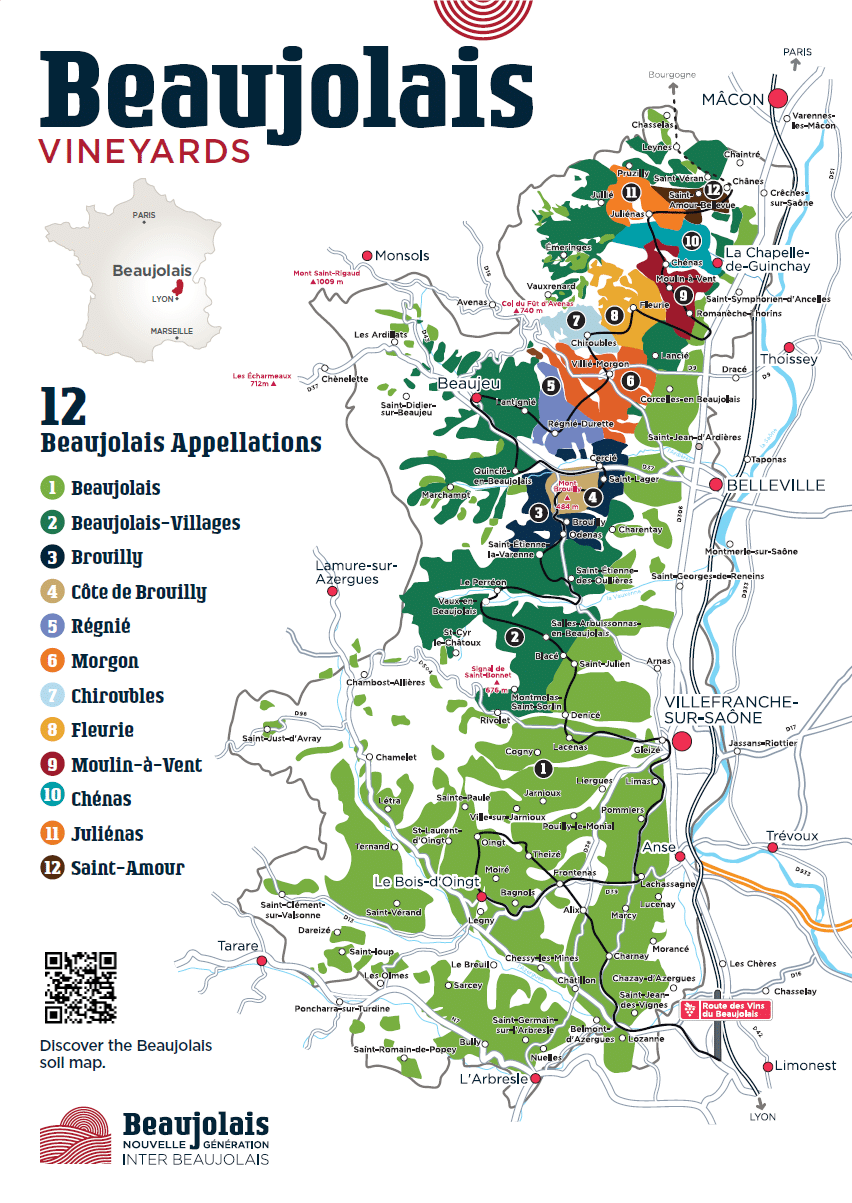
The finest wines of Beaujolais come from ten designated Cru villages located in the northern portion of the region.
Each Cru has its own personality:
MORGON
Perhaps the most famous Cru and home to many of the Gang of Four.
Morgon produces structured, age-worthy wines that often develop Burgundian complexity over time. The French even have a term for this transformation: morgonner—when a Beaujolais begins to resemble great Burgundy.
FLEURIE
Often called the "Queen of Beaujolais."
Elegant, floral, and aromatic, Fleurie offers notes of violets, roses, and red berries wrapped in silky textures.
MOULIN-À-VENT
The powerhouse of the region.
These wines possess structure, depth, and aging potential that frequently surprise collectors accustomed to far more expensive bottles.
CHIROUBLES
The highest elevation Cru.
Light, lifted, and beautifully perfumed.
BROUILLY & COTE DE BROUILLY
Generous, approachable, and wonderfully versatile at the table.
RÉGNIÉ
The youngest Cru designation, known for freshness and bright fruit expression.
JULIÉNAS
One of the oldest named Crus, producing wines with spice, richness, and complexity.
CHÉNAS
The smallest Cru, often offering earthy depth and impressive concentration.
SAINT-AMOUR
A romantic favorite that combines charm, freshness, and elegance.
THE MODERN RENAISSANCE
What the Gang of Four began decades ago has blossomed into a global appreciation for serious, terroir-driven Beaujolais.
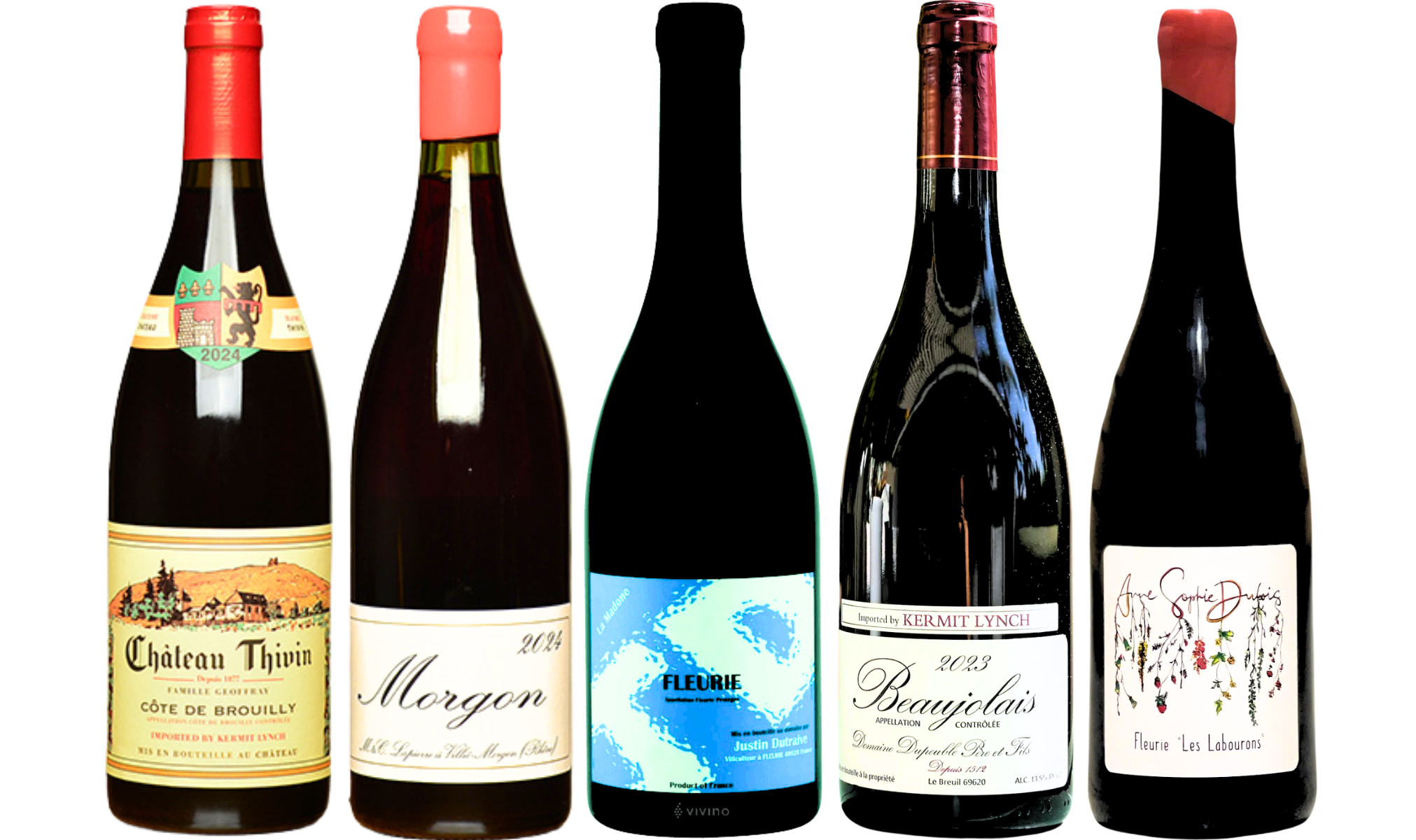
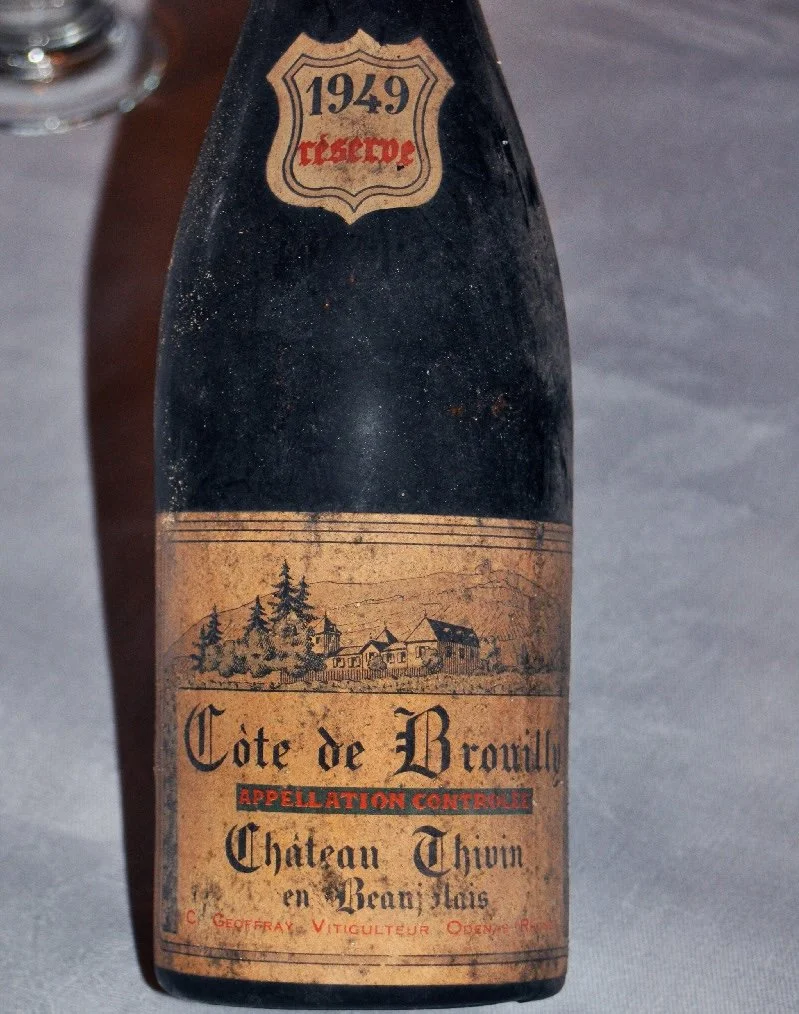
Their influence can be felt throughout the region today, alongside historic benchmark estates such as Château Thivin, whose Côte de Brouilly wines beautifully demonstrate the structure, minerality, and remarkable aging potential of Gamay.
In Fleurie, Justin Dutraive, son of famed winemaker Jean-Louis Dutraive of Domaine de la Grand’Cour, has become beloved for soulful, expressive wines that marry purity of fruit with an unmistakable sense of place. Similarly, Anne-Sophie Dubois also represents this exciting younger generation, crafting elegant, beautifully nuanced Fleurie from old vines with a distinctly Burgundian sensibility. Together, these producers illustrate what makes modern Cru Beaujolais so compelling: a region deeply rooted in tradition yet alive with individual expression, where Gamay can be joyful and immediately delicious while also possessing the complexity, character, and age-worthiness of truly great wine.
FOOD & WINE PAIRING: CRU BEAUJOLAIS
When I first started writing about wine almost 20 years ago, two of the “value” wines I frequently recommended were Sancerre and Beaujolais… It’s hard to believe now considering Sancerre’s meteoric rise in popularity with no perceivable price ceiling (at least not yet! Thanks, Taylor Swift) and a similar, although not quite as dramatic, thing has happened with Cru Beaujolais. While there are still accessible bottles in the $20-30 range, there are now single vineyard and lieux-dit bottlings which command higher prices but they also make exploration of this region and curating our selection at the wine shop so much fun!
These wines also fall squarely into the beloved “chillable reds” category, making them perfect for Summer sipping and a sublime transition into Fall. And while perfect for unaccompanied enjoyment, pairing Cru Beaujolais with food is incredibly joyful since these wines match so beautifully with so many things:
Charcuterie
Roast chicken
Burgers
Salmon
Mushroom dishes
Thanksgiving dinner
Holiday meals
Picnic fare
Few wines move so effortlessly from casual Tuesday dinners to Michelin-starred dining rooms.
Cru Beaujolais offers something increasingly rare in today's wine world: authenticity without pretense. These wines remind us that greatness isn't always accompanied by luxury pricing, cult status, or high octane marketing campaigns.
Sometimes greatness looks like a humble bottle of Gamay grown on granite slopes, crafted by passionate families, and poured around a table filled with friends. And while the wines of the Gang of Four helped change the way the world viewed Beaujolais, their legacy continues today in every bottle that captures the region's energy, honesty, and sense of place.
STEPHANIE'S SOMMELIER SELECTIONS
If you're just beginning your Cru Beaujolais journey, these are producers I return to again and again:
Jean Foillard — Ethereal, elegant Morgon that beautifully showcases old-vine Gamay.
Marcel Lapierre — A benchmark producer whose wines helped redefine the region.
Château Thivin — Classic Côte de Brouilly with incredible minerality and age-worthiness.
Justin Dutraive — Vibrant, soulful wines that capture the essence of Fleurie.
Guy Breton and Jean-Paul Thévenet — Essential bottles for understanding the philosophy that changed modern Beaujolais.
The next time you're searching for a wine that is food-friendly, endlessly fascinating, and incredibly enjoyable to drink please come by Highlands Wine Shoppe and let us help you find the perfect bottle for YOU!